The Facade on Piazza Matteotti
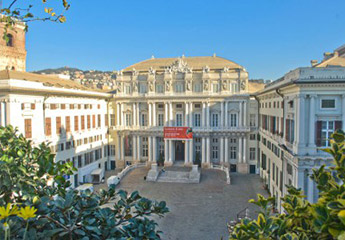
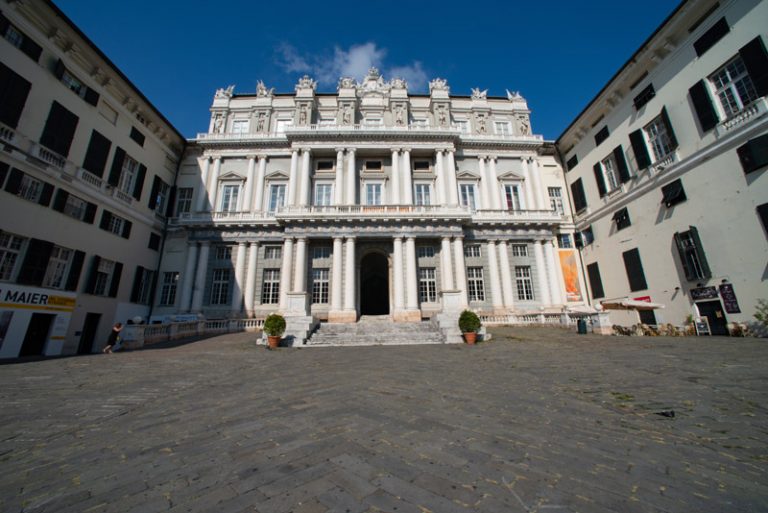
Until the mid-18th century, the current Piazza Matteotti was enclosed by a “curtain wall”: the Palace functioned essentially as a seat of government, featuring representative rooms and a parade ground. However, by the mid-1700s, as defensive needs became obsolete, the curtain wall was demolished. The sudden, breathtaking view of the square—and especially the facade—was striking, made even more majestic by the sloping approach culminating in the central staircase, flanked by two side ramps designed for horses and litters to ascend.
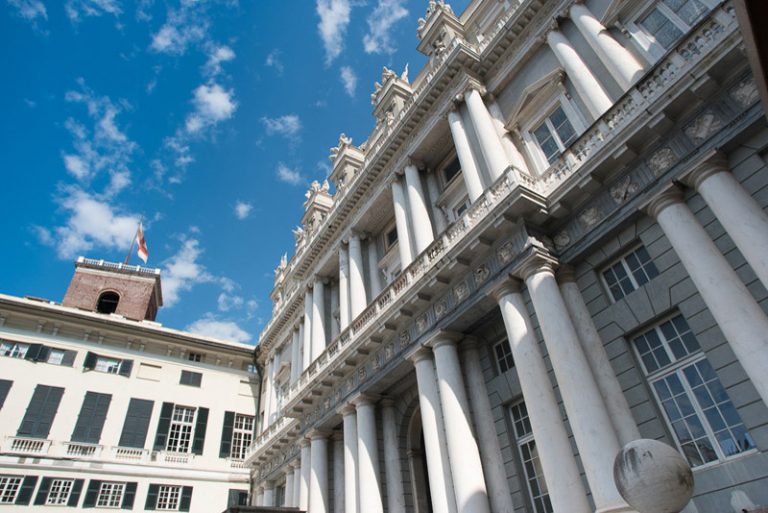
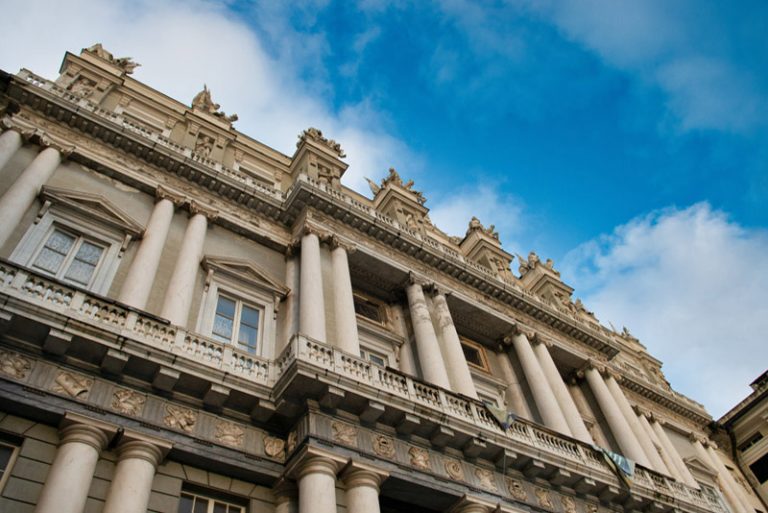
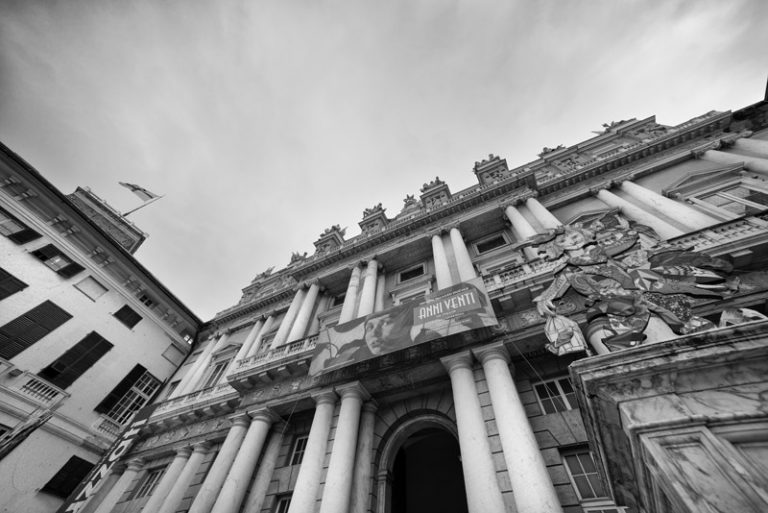
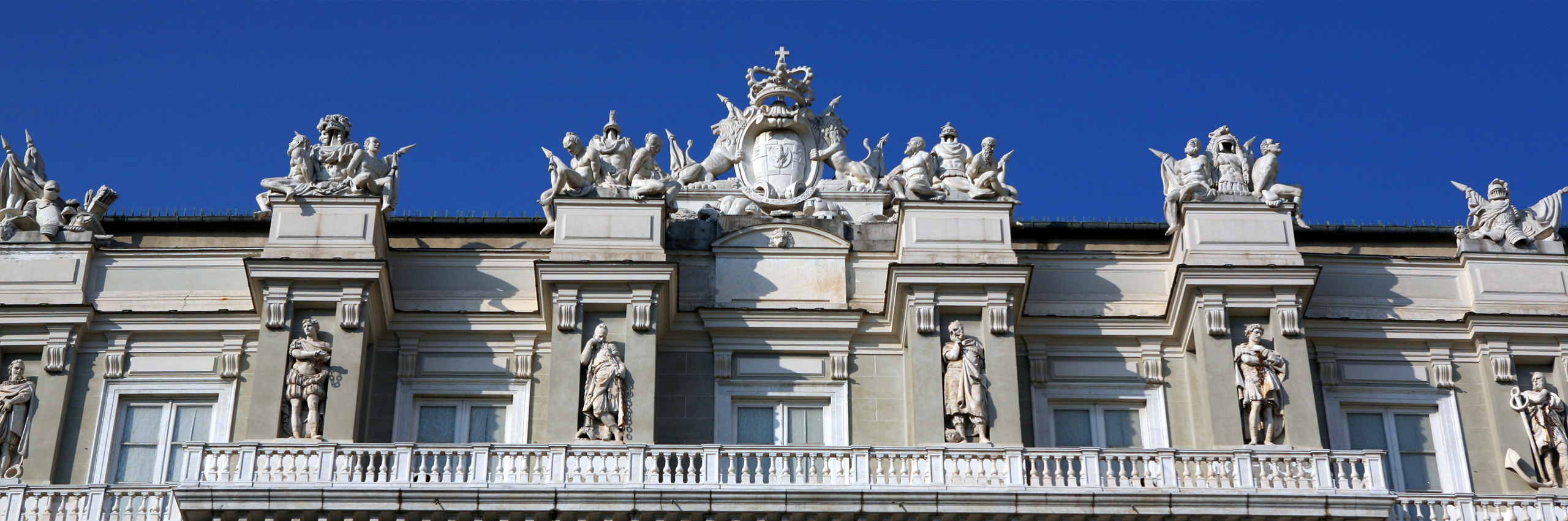
The present facade was designed by the Ticinese architect Simone Cantoni between 1778 and 1783, following a fierce fire on November 3, 1777, that destroyed the Palace’s central section from the roof down to the main floor. Cantoni, trained at the Academies of Rome and Parma, was regarded as one of the foremost exponents of early Neoclassicism in Northern Italy. Alongside the elegant facade—crafted from a combination of real marble and polished stucco made to imitate marble in subtle, light hues—he also rebuilt the halls of the Major and Minor Councils on the main floor. The facade’s sculptural decorations were created by Nicolò Traverso and Francesco Ravaschio, two Genoese sculptors who had honed their craft in Rome’s artistic circles and were specifically summoned in 1780. They made the trophy groups featuring figures of Barbary slaves and prisoners.
The Facade on Piazza De Ferrari
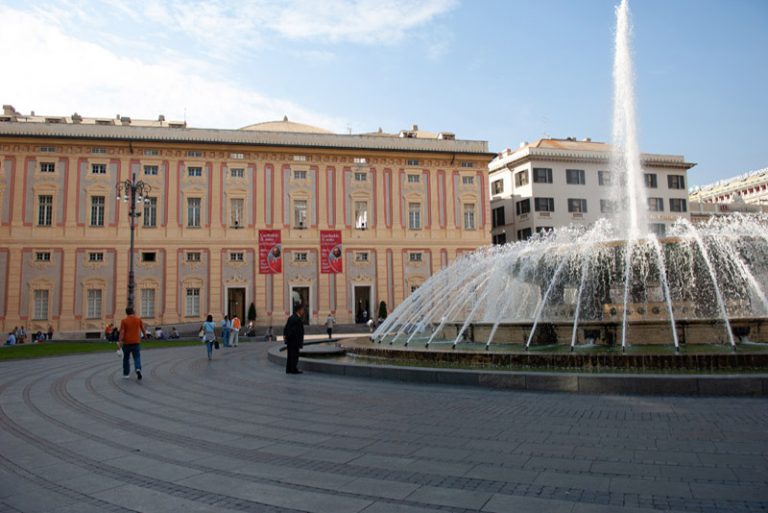
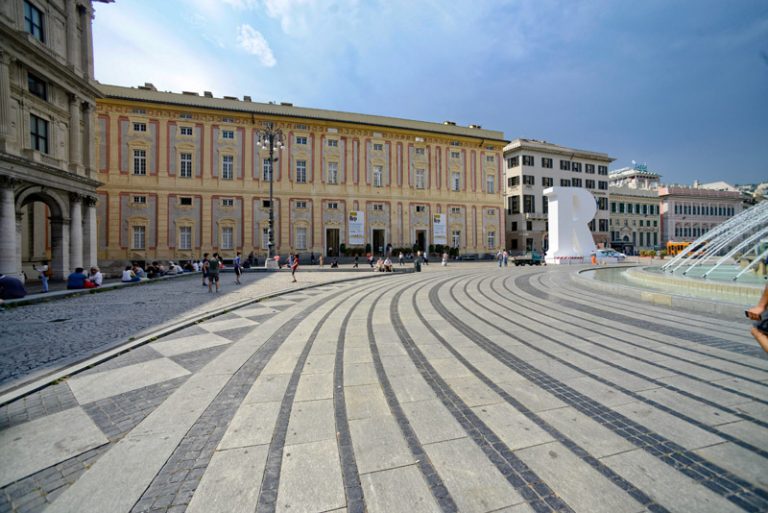
The facade overlooking Piazza De Ferrari underwent significant changes during restoration work led by Orlando Grosso in the early decades of the 20th century. Before Grosso’s interventions, the facade was likely a smooth plastered surface with visible traces of 17th-century frescoes. Grosso reimagined the facade in a classicist style, regularizing the openings and integrating them into a painted architectural scheme of columns and other elements. Additionally, three doors were opened to connect the square to the palace’s internal portico.
Painted in 1938, the facade’s decoration had become largely worn away by the time of the 1992 restoration. During this restoration, Grosso’s decoration was restored, but the three doors were raised to align with the level of the inner courtyard they face. The facade is arranged on two levels, marked by a painted decorative band. On the ground floor, besides the three doorways, there are several large windows, each topped with a smaller window. The upper level mirrors the layout of the ground floor, with a new series of large windows and small windows above them.